biewer terrier teeth is a lifelong commitment that every Biewer Terrier owner should prioritize. Biewer Terriers have the same 42 adult teeth as other dogs, yet their unique jaw structure, size, and temperament create specific dental challenges worth understanding. This complete guide covers everything you need to know about biewer terrier teeth care, brushing techniques, professional cleanings, and warning signs.
Biewer Terrier Teeth: Anatomy and Dental Profile
The Biewer Terrier (pronounced “beaver”) is a relatively recent AKC addition, recognized as a distinct breed from the Yorkshire Terrier in 2021 after decades as a tricolor variety. Their dental anatomy closely mirrors that of the Yorkie and other toy terriers: 42 permanent adult teeth packed into a very small jaw, creating the crowding, rotation, and malalignment typical of toy breeds. The Biewer Terrier’s fine, silky, floor-length coat — a breed hallmark — can trap food particles near the mouth, adding an environmental risk factor on top of the structural crowding. This combination of small jaw and long facial coat places the Biewer Terrier firmly in the high dental disease risk category, with periodontal disease onset typically beginning before age three without consistent preventive care.
According to the American Veterinary Medical Association (AVMA), dental disease is the most common health condition in adult dogs, affecting over 80% of dogs by age three. For Biewer Terriers, early and consistent biewer terrier teeth care is the most effective prevention strategy.
How to Brush Biewer Terrier Teeth
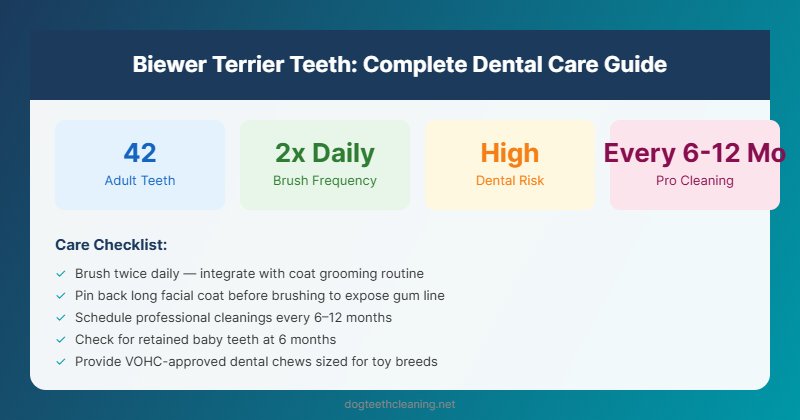
Brush your Biewer Terrier’s teeth twice daily, ideally making it part of the same grooming routine that maintains their flowing silky coat. Before brushing, gently part and pin back any long facial hair to expose the lip line and gum area. Use a small, soft-bristled toothbrush or a finger brush with enzymatic dog toothpaste in a flavor your dog enjoys. Work at a 45-degree angle to the gum line, covering both upper and lower arcades from front to back. Because of the toy breed jaw size, the back premolars and molars can be challenging to reach — enzymatic paste provides ongoing chemical antimicrobial action in areas where bristle contact is limited. Start the brushing habit from the first day your puppy comes home.
- Choose the right tools: Use a dog-specific toothbrush or silicone finger brush with enzymatic toothpaste formulated for dogs.
- Start slow: Let your Biewer Terrier sniff and lick the toothpaste before introducing the brush.
- Focus on the gumline: Hold the brush at a 45-degree angle to the gum line where plaque accumulates.
- Brush in circles: Use small circular motions on all tooth surfaces — outer, inner, and chewing surfaces.
- Reward generously: Always follow brushing with praise or a dental treat to build positive associations.
Warning Signs of Dental Problems in Biewer Terriers
Toy terriers like the Biewer are at elevated risk of developing periodontal disease before age 3 without consistent home care. Early signs include bad breath that persists even after eating, visible yellow or brown buildup along the gum line, and occasional bleeding when brushing — which is a sign of gingivitis rather than a reason to stop brushing. Left untreated, periodontal disease progresses to bone loss, loose teeth, and root exposure that is painful and expensive to treat. The Biewer Terrier’s small body size also means dental infections can more readily affect systemic health, as the proportion of oral bacterial load to body mass is greater than in larger dogs, increasing the risk of cardiac and renal complications from chronic dental disease.
- Persistent bad breath (halitosis) beyond normal “dog breath”
- Visible yellow-brown tartar deposits on teeth, especially near the gum line
- Red, swollen, or bleeding gums
- Loose or missing teeth
- Difficulty chewing, dropping food, or avoiding hard kibble
- Pawing at the mouth or face
- Drooling more than usual
- Facial swelling, especially below the eye (possible tooth abscess)
Professional Dental Cleaning for Biewer Terriers
Schedule professional dental cleanings every 6 to 12 months, with closer to every 6 months for most Biewer Terriers given their toy breed jaw size and crowding. Professional cleaning includes ultrasonic scaling both above and below the gum line, polishing, periodontal probing, and full-mouth radiographs. Anesthesia is required for a safe and thorough cleaning — anesthesia-free scaling only removes visible surface tartar and leaves subgingival disease completely untreated. Ask your veterinarian to perform full-mouth radiographs at least annually, as root and bone disease in toy breeds often develops silently before becoming apparent on visual examination alone.
Professional cleanings involve a thorough examination, full-mouth dental X-rays, scaling above and below the gumline, polishing, and treatment of any diseased teeth. Your vet will also assess for periodontal disease, a common but serious condition if left untreated. Most dogs recover fully within 24 hours and immediately benefit from a clean, healthy mouth.
Diet and Dental Chews for Biewer Terrier Teeth
Choose a high-quality, complete diet formulated for toy breeds. Appropriately sized dry kibble provides mild mechanical abrasion during chewing. VOHC-approved dental chews sized for toy breeds supplement daily brushing effectively — ensure the chew is sized appropriately for a dog typically under 10 pounds. Water additives with a VOHC Accepted seal add a low-effort daily layer of plaque prevention. Avoid high-sugar treats and excessive wet food, which leave more residue on tooth surfaces and accelerate the bacterial proliferation that drives plaque and tartar formation.
- VOHC-approved dental chews: Look for the Veterinary Oral Health Council (VOHC) seal on dental treats.
- Dry kibble: Crunchy kibble creates a mild abrasive effect that reduces plaque — better than soft food alone.
- Raw carrots or apple slices: Natural crunchy snacks that help clean teeth mechanically.
- Dental water additives: Antimicrobial additives in drinking water reduce bacteria in the mouth.
- Avoid: Sticky treats, cooked bones, and hard items that can crack teeth (e.g., antlers, ice).
Biewer Terrier-Specific Dental Notes
The Biewer Terrier shares the Yorkie’s stunning coat genetics but has been developed as a distinct AKC-recognized breed through careful breeding records and parentage documentation. Their small size, companion temperament, and long lifespan of 12 to 15 years or more make long-term dental health planning essential — a dog that lives 14 years without good dental care will have developed severe disease by middle age. The Biewer’s cheerful, adaptable personality makes them excellent candidates for positive reinforcement toothbrushing training. Start gentle, use high-value taste rewards, and the routine quickly becomes a valued part of the daily bond between dog and owner.
Learn more about the AKC’s Biewer Terrier breed profile to understand this breed’s full health needs. For a complete overview of dental care across all life stages, visit our breed dental health guide and our comprehensive dog dental care resource.
Frequently Asked Questions About Biewer Terrier Teeth
- Q: Is the Biewer Terrier different from the Yorkshire Terrier in terms of dental care?
Their dental care needs are virtually identical. Both are toy terriers with small jaws, dental crowding, and long silky coats that can trap food near the mouth. The Biewer Terrier was developed from Yorkie lines and shares the same elevated toy-breed dental disease risk. The same twice-daily brushing, VOHC dental chews, and bi-annual professional cleaning schedule applies to both breeds. - Q: How often should I brush my Biewer Terrier’s teeth?
Twice daily is the gold standard for any toy breed. At the absolute minimum, brush once daily to interrupt the 24-hour plaque cycle before tartar forms. Incorporating brushing into the regular grooming routine — which Biewer Terriers already require for coat maintenance — helps establish consistency and makes the habit sustainable. - Q: What size dental chews are appropriate for a Biewer Terrier?
Look for VOHC-approved chews labeled for toy breeds or dogs under 10–15 pounds. The chew should be large enough that your dog can gnaw rather than swallow it whole, but small enough that they can hold it comfortably. Avoid large breed sizes or very hard chews like antlers that could fracture a tiny tooth. - Q: When do Biewer Terrier puppies get their permanent teeth?
Biewer Terrier puppies start losing baby teeth around 3–4 months and should have all 42 permanent teeth by about 6–7 months of age. Check regularly during this transition for retained deciduous teeth, which are common in toy breeds and require veterinary evaluation if not expelled naturally.