bullmastiff teeth is a lifelong commitment that every Bullmastiff owner should prioritize. Bullmastiffs have the same 42 adult teeth as other dogs, yet their unique jaw structure, size, and temperament create specific dental challenges worth understanding. This complete guide covers everything you need to know about bullmastiff teeth care, brushing techniques, professional cleanings, and warning signs.
Bullmastiff Teeth: Anatomy and Dental Profile
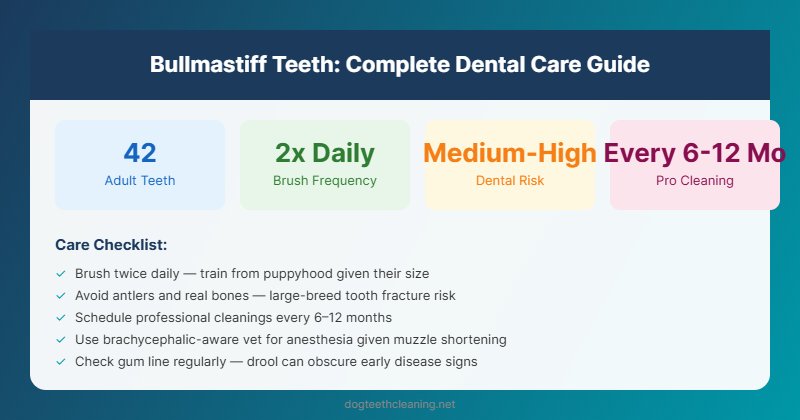
The Bullmastiff is a powerful, large breed developed in England by crossing Mastiffs with Bulldogs to create an ideal gamekeeper’s guard dog. That Bulldog heritage is apparent in the muzzle: slightly shortened and broad compared to the pure Mastiff, giving the Bullmastiff a moderate degree of brachycephalic jaw compression. This mild compression means their 42 permanent adult teeth fit into a somewhat shortened jaw, producing mild to moderate crowding — less extreme than a Pug or Pekingese but more than a Labrador or German Shepherd. Bullmastiffs typically weigh 100 to 130 pounds, and their large jaw size makes individual tooth access relatively straightforward. The primary challenges are the dog’s considerable size and the need for cooperative behavior, both of which are addressed through early training.
According to the American Veterinary Medical Association (AVMA), dental disease is the most common health condition in adult dogs, affecting over 80% of dogs by age three. For Bullmastiffs, early and consistent bullmastiff teeth care is the most effective prevention strategy.
How to Brush Bullmastiff Teeth
Brush your Bullmastiff’s teeth twice daily using a large, soft-bristled toothbrush or a quality finger brush with enzymatic dog toothpaste. Their large mouth makes full-arch coverage accessible, and the Bullmastiff’s cooperative, gentle nature — despite their imposing size — means most individuals accept brushing well when habituated from puppyhood. Work at a 45-degree angle to the gum line, covering all surfaces front to back on both upper and lower arcades. Pay attention to the incisor and premolar regions where mild muzzle shortening may create any crowding. Given their drool production, having a towel on hand makes the process more manageable.
- Choose the right tools: Use a dog-specific toothbrush or silicone finger brush with enzymatic toothpaste formulated for dogs.
- Start slow: Let your Bullmastiff sniff and lick the toothpaste before introducing the brush.
- Focus on the gumline: Hold the brush at a 45-degree angle to the gum line where plaque accumulates.
- Brush in circles: Use small circular motions on all tooth surfaces — outer, inner, and chewing surfaces.
- Reward generously: Always follow brushing with praise or a dental treat to build positive associations.
Warning Signs of Dental Problems in Bullmastiffs
Bullmastiffs are prone to several serious health conditions including hip dysplasia, bloat, and certain cancers — and periodontal disease should be taken as seriously as these, particularly because chronic oral infection contributes to systemic inflammation that can complicate cardiac and renal health. Their slightly shortened muzzle creates mild crowding that traps food more than a fully long-muzzled breed. Signs of dental disease include persistent halitosis, visible tartar accumulation, gum recession, reluctance to eat hard food, or pawing at the face. Bullmastiffs are stoic and may not show obvious dental pain — routine professional examinations are the most reliable early detection method for this breed.
- Persistent bad breath (halitosis) beyond normal “dog breath”
- Visible yellow-brown tartar deposits on teeth, especially near the gum line
- Red, swollen, or bleeding gums
- Loose or missing teeth
- Difficulty chewing, dropping food, or avoiding hard kibble
- Pawing at the mouth or face
- Drooling more than usual
- Facial swelling, especially below the eye (possible tooth abscess)
Professional Dental Cleaning for Bullmastiffs
Schedule professional dental cleanings every 6 to 12 months. For large, moderately brachycephalic breeds like the Bullmastiff, annual cleanings with excellent home care are often sufficient; 6-month cleanings are recommended for rapid tartar accumulators or where home brushing is inconsistent. Professional cleanings include ultrasonic scaling above and below the gum line, polishing, and full-mouth radiographs to detect subgingival disease. Anesthetic protocols should account for the breed’s large size, brachycephalic tendencies, and potential respiratory considerations — choose a veterinarian experienced with large brachycephalic breeds.
Professional cleanings involve a thorough examination, full-mouth dental X-rays, scaling above and below the gumline, polishing, and treatment of any diseased teeth. Your vet will also assess for periodontal disease, a common but serious condition if left untreated. Most dogs recover fully within 24 hours and immediately benefit from a clean, healthy mouth.
Diet and Dental Chews for Bullmastiff Teeth
Feed your Bullmastiff a high-quality, complete diet formulated for large breeds. Large-breed dry kibble provides mild mechanical abrasion during chewing. VOHC-approved dental chews sized for large dogs supplement brushing effectively — ensure the chew is sized so your Bullmastiff must genuinely gnaw rather than swallow it whole. Apply the thumbnail dent test: avoid antlers, real bones, and extremely hard chews that can fracture even large powerful teeth. Water additives with VOHC acceptance provide daily plaque inhibition. Avoid excessive calorie intake — Bullmastiffs are prone to weight gain that complicates overall health management.
- VOHC-approved dental chews: Look for the Veterinary Oral Health Council (VOHC) seal on dental treats.
- Dry kibble: Crunchy kibble creates a mild abrasive effect that reduces plaque — better than soft food alone.
- Raw carrots or apple slices: Natural crunchy snacks that help clean teeth mechanically.
- Dental water additives: Antimicrobial additives in drinking water reduce bacteria in the mouth.
- Avoid: Sticky treats, cooked bones, and hard items that can crack teeth (e.g., antlers, ice).
Bullmastiff-Specific Dental Notes
The Bullmastiff is a devoted, quiet companion and guardian that belies its imposing size with a gentle, affectionate temperament. That gentleness extends to veterinary care — most Bullmastiffs are cooperative patients when trained from puppyhood. Dental care for this breed should be integrated with the other health monitoring critical for a large brachycephalic dog: weight management, joint health, cardiac monitoring, and cancer screening. Their 7 to 9 year lifespan, shorter than many breeds, makes every year of good health maintenance particularly valuable. Proactive dental care that prevents systemic spread of oral bacteria is a meaningful contributor to maximizing quality of life across those years.
Learn more about the AKC’s Bullmastiff breed profile to understand this breed’s full health needs. For a complete overview of dental care across all life stages, visit our breed dental health guide and our comprehensive dog dental care resource.
Frequently Asked Questions About Bullmastiff Teeth
- Q: Do Bullmastiffs have dental problems because of their short muzzle?
The Bullmastiff’s mildly shortened Bulldog-heritage muzzle creates moderate dental crowding — more than long-muzzled breeds but far less extreme than Pugs, Bulldogs, or other severely brachycephalic breeds. Twice-daily brushing and professional cleanings every 6–12 months effectively manage this risk. - Q: How do I brush a Bullmastiff’s teeth safely given their size?
Establish brushing acceptance through positive reinforcement training from puppyhood, starting with fingertip lip handling before introducing a brush. A trained adult Bullmastiff is typically a cooperative brushing partner — their gentle temperament is an asset. If an adult dog is resistant, work with a professional trainer on desensitization before forcing the routine. - Q: Are Bullmastiffs prone to tooth fractures?
Their powerful bite makes hard chew objects a fracture risk. Follow the thumbnail dent test: if you cannot dent the chew, it is too hard. Avoid antlers, real bones, and very hard nylon toys. Slab fractures of carnassial teeth are the most common fracture type in large chewing breeds. - Q: How does dental disease affect Bullmastiff health?
Bullmastiffs are already prone to cardiac and kidney conditions where chronic oral infection contributes to systemic damage. Periodontal bacteria entering the bloodstream add inflammatory burden to organs already at elevated risk. Dental health is not low-risk just because a dog is large — for this breed it connects directly to the cardiac and renal health they’re already challenged by.