chinese crested teeth is a lifelong commitment that every Chinese Crested owner should prioritize. Chinese Cresteds have the same 42 adult teeth as other dogs, yet their unique jaw structure, size, and temperament create specific dental challenges worth understanding. This complete guide covers everything you need to know about chinese crested teeth care, brushing techniques, professional cleanings, and warning signs.
Chinese Crested Teeth: Anatomy and Dental Profile
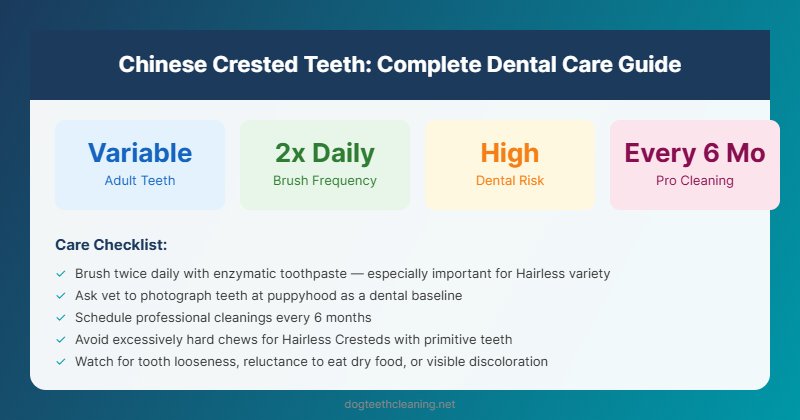
The Chinese Crested is one of the most dentally unique breeds in the canine world. The Hairless variety may carry a gene variant associated with ectodermal dysplasia, producing what are called primitive or tushes teeth — narrow, peg-shaped, and angled forward rather than vertical. These dogs may also have fewer than the standard 42 teeth, with some teeth congenitally absent. The Powderpuff variety, which is homozygous for the coated gene, typically has normal canine dentition. For both varieties, the small jaw size and toy-breed conformation increase the baseline risk of dental crowding and periodontal disease. The unique tooth morphology seen in Hairless individuals makes them especially susceptible to root exposure and earlier tooth loss compared to breeds with standard dentition.
According to the American Veterinary Medical Association (AVMA), dental disease is the most common health condition in adult dogs, affecting over 80% of dogs by age three. For Chinese Cresteds, early and consistent chinese crested teeth care is the most effective prevention strategy.
How to Brush Chinese Crested Teeth
For both Hairless and Powderpuff Chinese Cresteds, twice-daily toothbrushing is the gold standard. The Hairless variety presents special considerations: their primitive, peg-shaped teeth have less surface area for bristle contact, making enzymatic toothpaste — which works chemically rather than purely mechanically — especially important. Use a small, ultra-soft bristled toothbrush or a quality finger brush and be particularly gentle around any teeth that appear to protrude or angle forward. For Powderpuff Cresteds, the abundant coat around the face requires parting before brushing, similar to other heavily coated toy breeds. Conditioned acceptance of brushing from puppyhood is critical for this sensitive, responsive breed.
- Choose the right tools: Use a dog-specific toothbrush or silicone finger brush with enzymatic toothpaste formulated for dogs.
- Start slow: Let your Chinese Crested sniff and lick the toothpaste before introducing the brush.
- Focus on the gumline: Hold the brush at a 45-degree angle to the gum line where plaque accumulates.
- Brush in circles: Use small circular motions on all tooth surfaces — outer, inner, and chewing surfaces.
- Reward generously: Always follow brushing with praise or a dental treat to build positive associations.
Warning Signs of Dental Problems in Chinese Cresteds
The Hairless Chinese Crested’s primitive teeth are more susceptible to root exposure, early loss, and unusual wear patterns than standard canine dentition. Because the tooth shape and angulation differ from typical dogs, veterinarians unfamiliar with the breed may initially flag the dentition as abnormal — this is expected for Hairless individuals and is breed-typical. That said, dental disease is not normal and should not be accepted as inevitable. Both varieties can develop periodontal disease, and the Hairless variety’s atypical dentition makes monitoring by a veterinary practitioner familiar with the breed especially valuable. Signs of dental disease include bad breath, reluctance to eat dry food, pawing at the face, and visible tooth discoloration or looseness.
- Persistent bad breath (halitosis) beyond normal “dog breath”
- Visible yellow-brown tartar deposits on teeth, especially near the gum line
- Red, swollen, or bleeding gums
- Loose or missing teeth
- Difficulty chewing, dropping food, or avoiding hard kibble
- Pawing at the mouth or face
- Drooling more than usual
- Facial swelling, especially below the eye (possible tooth abscess)
Professional Dental Cleaning for Chinese Cresteds
Schedule professional veterinary dental cleanings every 6 to 12 months, with closer to every 6 months for Hairless individuals given their unique dentition. A veterinarian familiar with Chinese Crested-specific dental anatomy — particularly the forward-angled, peg-shaped teeth of the Hairless variety — is better equipped to assess what is breed-normal versus disease-related. Dental radiographs at each cleaning appointment allow monitoring of root health and bone levels, which is especially important for the atypical root morphology of primitive teeth. Discuss establishing early dental radiographic baseline images with your vet while your dog is young, before disease is present, to enable accurate monitoring over time.
Professional cleanings involve a thorough examination, full-mouth dental X-rays, scaling above and below the gumline, polishing, and treatment of any diseased teeth. Your vet will also assess for periodontal disease, a common but serious condition if left untreated. Most dogs recover fully within 24 hours and immediately benefit from a clean, healthy mouth.
Diet and Dental Chews for Chinese Crested Teeth
Feed your Chinese Crested a complete, balanced diet appropriate for small breeds. For Hairless individuals with primitive, peg-shaped teeth, very hard kibble or excessively hard chews can put unusual stress on abnormally angulated teeth — opt for moderately sized, appropriately firm kibble and avoid the hardest dental chews. VOHC-approved enzymatic chews designed for small dogs are a safer and effective daily supplement for plaque control. Powderpuff Cresteds have standard teeth and can tolerate the same range of dental chews as other small breeds. Fresh water always available helps rinse the mouth and dilute oral bacteria between brushing sessions.
- VOHC-approved dental chews: Look for the Veterinary Oral Health Council (VOHC) seal on dental treats.
- Dry kibble: Crunchy kibble creates a mild abrasive effect that reduces plaque — better than soft food alone.
- Raw carrots or apple slices: Natural crunchy snacks that help clean teeth mechanically.
- Dental water additives: Antimicrobial additives in drinking water reduce bacteria in the mouth.
- Avoid: Sticky treats, cooked bones, and hard items that can crack teeth (e.g., antlers, ice).
Chinese Crested-Specific Dental Notes
The Chinese Crested is an alert, playful, and surprisingly robust toy breed despite its delicate appearance. The Hairless variety’s unique dental genetics mean that every owner should become familiar with what their individual dog’s teeth look like so they can identify changes over time — photographing the teeth at puppyhood creates a useful baseline record. The Powderpuff variety, while sharing the name and many traits, is dentally closer to other small dogs and should be treated accordingly. Both varieties bond deeply with their owners, making dental care an opportunity for bonding when introduced gently. Positive reinforcement training to accept daily toothbrushing is very effective in this breed and well worth the investment of a few weeks of patient conditioning.
Learn more about the AKC’s Chinese Crested breed profile to understand this breed’s full health needs. For a complete overview of dental care across all life stages, visit our breed dental health guide and our comprehensive dog dental care resource.
Frequently Asked Questions About Chinese Crested Teeth
- Q: Why do Chinese Crested Hairless dogs have different-looking teeth?
The hairless gene in Chinese Cresteds is associated with ectodermal dysplasia, which affects not just hair follicles but also dental development. Hairless Cresteds often develop narrow, peg-shaped, forward-angled tushes teeth rather than the standard vertical canine tooth shape, and may have congenitally missing teeth. These traits are breed-specific and not signs of illness, but they do require attentive monitoring. - Q: Do Chinese Crested Powderpuffs have the same dental problems as Hairless ones?
Generally, no. Powderpuff Chinese Cresteds have standard canine dentition and do not carry the ectodermal dysplasia-associated tooth variation. They are still a small breed with elevated baseline dental disease risk, so daily brushing and regular professional cleanings are important, but their teeth are structurally normal. - Q: Can I use the same dental products for my Chinese Crested as for other dogs?
Yes for toothpaste and water additives. For dental chews, choose products specifically sized for toy breeds and avoid excessively hard options — particularly for Hairless individuals whose peg teeth may be more vulnerable to stress fractures. Anything with the VOHC Accepted seal and sized appropriately for small dogs is a good starting point. - Q: How often should a Chinese Crested see the vet for dental care?
Every 6–12 months for professional cleanings, depending on how fast tartar accumulates for your individual dog. Hairless Cresteds should ideally be seen twice yearly given their unique dental morphology. Beyond cleanings, incorporate a dental examination into every routine wellness visit — at minimum annually, and twice yearly for dogs over age 7.