chinese shar pei teeth is a lifelong commitment that every Chinese Shar-Pei owner should prioritize. Chinese Shar-Peis have the same 42 adult teeth as other dogs, yet their unique jaw structure, size, and temperament create specific dental challenges worth understanding. This complete guide covers everything you need to know about chinese shar pei teeth care, brushing techniques, professional cleanings, and warning signs.
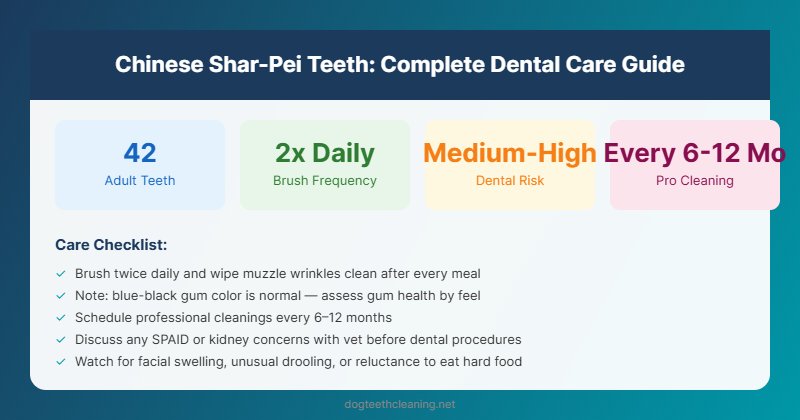
Chinese Shar-Pei Teeth: Anatomy and Dental Profile
The Chinese Shar-Pei is a distinctive medium-to-large breed best known for its abundant wrinkled skin and characteristic hippopotamus face. Their dental structure varies between the two main types — the meat-mouth type has a shorter, fleshier muzzle with more dental crowding, while the bone-mouth type has a longer muzzle with more room for the standard 42 permanent teeth. Both types are susceptible to periodontal disease, but meat-mouth Shar-Peis face a higher structural risk due to jaw compression. The breed’s unusual cobalt-blue or purple-black gum and tongue pigmentation is entirely normal and genetically determined — it should not be mistaken for signs of cyanosis or illness. Tartar and plaque accumulate on tooth surfaces regardless of gum pigmentation.
According to the American Veterinary Medical Association (AVMA), dental disease is the most common health condition in adult dogs, affecting over 80% of dogs by age three. For Chinese Shar-Peis, early and consistent chinese shar pei teeth care is the most effective prevention strategy.
How to Brush Chinese Shar-Pei Teeth
Brush your Chinese Shar-Pei’s teeth twice daily. Despite their somewhat imposing appearance and independent temperament, most Shar-Peis accept toothbrushing readily when habituated from puppyhood. Use a soft-bristled toothbrush sized for medium-to-large dogs, or a finger brush, with enzymatic dog toothpaste. The abundant muzzle wrinkles of meat-mouth individuals require particular attention: lift each skin fold around the lips before brushing to fully access the gum line, as these folds trap food and moisture that accelerates gingival disease. Because the distinctive dark gum color can make spotting early redness or inflammation more challenging visually, run a fingertip along the gum line regularly to feel for swelling or tenderness.
- Choose the right tools: Use a dog-specific toothbrush or silicone finger brush with enzymatic toothpaste formulated for dogs.
- Start slow: Let your Chinese Shar-Pei sniff and lick the toothpaste before introducing the brush.
- Focus on the gumline: Hold the brush at a 45-degree angle to the gum line where plaque accumulates.
- Brush in circles: Use small circular motions on all tooth surfaces — outer, inner, and chewing surfaces.
- Reward generously: Always follow brushing with praise or a dental treat to build positive associations.
Warning Signs of Dental Problems in Chinese Shar-Peis
Chinese Shar-Peis are prone to several systemic health conditions — including Shar-Pei Autoinflammatory Disease (SPAID), amyloidosis, and skin fold infections — that can complicate dental health management and overall anesthetic risk. Their wrinkled lips and muzzle folds create warm, moist environments that harbor bacteria near the mouth, meaning oral and skin fold bacteria can interact and contribute to gingival disease. Signs of dental disease include persistent bad breath, reluctance to eat hard food, facial swelling, or unusual drooling. Because the blue-black gum color makes visual redness assessment unreliable, periodically probing gum tissue gently with a fingertip to check for swelling or softness is more diagnostic than a visual exam alone.
- Persistent bad breath (halitosis) beyond normal “dog breath”
- Visible yellow-brown tartar deposits on teeth, especially near the gum line
- Red, swollen, or bleeding gums
- Loose or missing teeth
- Difficulty chewing, dropping food, or avoiding hard kibble
- Pawing at the mouth or face
- Drooling more than usual
- Facial swelling, especially below the eye (possible tooth abscess)
Professional Dental Cleaning for Chinese Shar-Peis
Schedule professional dental cleanings every 6 to 12 months. Due to the breed’s potential for anesthesia complications — particularly those related to skin fold anatomy around the airway and predisposition to fever conditions — choose a veterinarian experienced with Shar-Peis. Pre-anesthetic bloodwork is especially important for this breed. Discuss your dog’s SPAID status with your veterinarian before scheduling any dental procedure, as active fever episodes or renal compromise may require scheduling adjustments. Professional cleanings including full-mouth radiographs allow early detection of bone loss and root disease before they cause visible symptoms.
Professional cleanings involve a thorough examination, full-mouth dental X-rays, scaling above and below the gumline, polishing, and treatment of any diseased teeth. Your vet will also assess for periodontal disease, a common but serious condition if left untreated. Most dogs recover fully within 24 hours and immediately benefit from a clean, healthy mouth.
Diet and Dental Chews for Chinese Shar-Pei Teeth
Feed your Chinese Shar-Pei a complete, balanced diet appropriate for their size and any known food sensitivities — the breed has a relatively high rate of food allergies and gastrointestinal sensitivities. Dry kibble of an appropriate size for a medium-large breed provides mild mechanical abrasion during chewing. VOHC-approved dental chews for large breeds can supplement brushing effectively. Water additives with VOHC acceptance provide daily plaque inhibition. Avoid table scraps and high-sugar treats, and ensure the muzzle wrinkles are wiped clean after every meal to prevent bacterial accumulation in the folds that sit directly adjacent to the gum line.
- VOHC-approved dental chews: Look for the Veterinary Oral Health Council (VOHC) seal on dental treats.
- Dry kibble: Crunchy kibble creates a mild abrasive effect that reduces plaque — better than soft food alone.
- Raw carrots or apple slices: Natural crunchy snacks that help clean teeth mechanically.
- Dental water additives: Antimicrobial additives in drinking water reduce bacteria in the mouth.
- Avoid: Sticky treats, cooked bones, and hard items that can crack teeth (e.g., antlers, ice).
Chinese Shar-Pei-Specific Dental Notes
The Chinese Shar-Pei is a deeply loyal, somewhat independent breed with an ancient heritage as a guard and hunting dog in southern China. Their dental care integrates naturally with the broader wrinkle maintenance routine that this breed demands. Many owners develop efficient multi-step daily grooming routines that cover wrinkle cleaning, ear care, and dental brushing in a single session. The breed’s distinctive blue-black gum and tongue coloring requires no treatment — it is a celebrated genetic trait — but it does mean owners should rely more on tactile gum assessment and professional examination than on visual color changes alone for early dental disease detection.
Learn more about the AKC’s Chinese Shar-Pei breed profile to understand this breed’s full health needs. For a complete overview of dental care across all life stages, visit our breed dental health guide and our comprehensive dog dental care resource.
Frequently Asked Questions About Chinese Shar-Pei Teeth
- Q: Are Chinese Shar-Pei gums supposed to be black or blue?
Yes — blue-black or purple-black gum and tongue pigmentation is entirely normal and characteristic of the Chinese Shar-Pei breed. This deep pigmentation is genetic, not a sign of illness. However, owners should note that this coloring can obscure visual detection of gum redness, so periodically feeling the gum tissue for swelling is a more reliable early-warning method than looking for color changes alone. - Q: Do Chinese Shar-Peis have more dental problems than other breeds?
Meat-mouth Shar-Peis, with their shorter muzzles, have moderate dental crowding that elevates their risk above the average medium-sized dog. All Shar-Peis have skin folds near the mouth that can harbor bacteria contributing to gingival disease. They require consistent home care and professional cleanings but are not in the extreme high-risk category occupied by brachycephalic toy breeds. - Q: Can dental disease make Shar-Pei health problems worse?
Yes. Chinese Shar-Peis are prone to amyloidosis — a protein-deposit kidney disease linked to chronic inflammation. Chronic dental infection is an ongoing source of systemic inflammation that may contribute to or accelerate amyloid deposition. Maintaining good oral health is especially important for this breed from a whole-body health perspective. - Q: How do I brush around my Shar-Pei’s muzzle wrinkles?
Lift each wrinkle fold away from the muzzle with one hand while brushing with the other, working methodically around the entire lip line. After brushing, use a soft damp cloth to wipe inside each fold to remove food debris and moisture. The goal is both to clean the teeth and to reduce bacterial accumulation in folds that sit directly adjacent to the gum line.