cockapoo teeth is a lifelong commitment that every Cockapoo owner should prioritize. Cockapoos have the same 42 adult teeth as other dogs, yet their unique jaw structure, size, and temperament create specific dental challenges worth understanding. This complete guide covers everything you need to know about cockapoo teeth care, brushing techniques, professional cleanings, and warning signs.
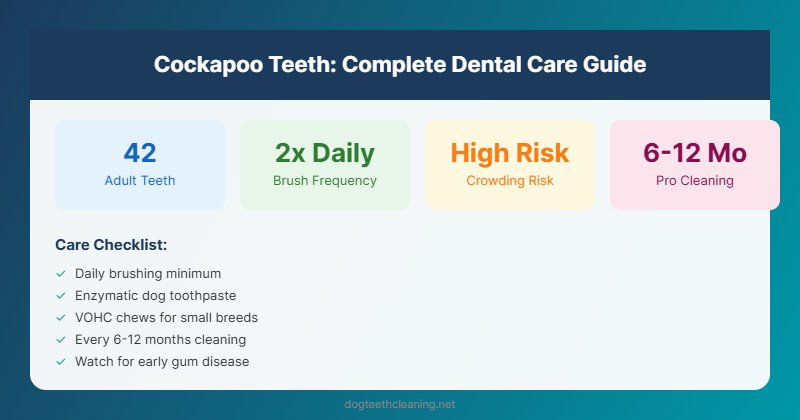
Cockapoo Teeth: Anatomy and Dental Profile
Cockapoos (Cocker Spaniel × Poodle) typically have a small-to-medium jaw with 42 adult teeth. The Cocker Spaniel parent is known for dental crowding and elevated periodontal disease risk — traits that many Cockapoos inherit. Their rounded, moderate-length muzzle can lead to mild-to-moderate crowding, particularly in the smaller toy and miniature Cockapoo sizes. Early and consistent dental care is essential for this popular designer breed.
According to the American Veterinary Medical Association (AVMA), dental disease is the most common health condition in adult dogs, affecting over 80% of dogs by age three. For Cockapoos, early and consistent cockapoo teeth care is the most effective prevention strategy.
How to Brush Cockapoo Teeth
Use a small dog toothbrush with enzymatic toothpaste to brush Cockapoo teeth twice daily. Cockapoos are cheerful, trainable dogs that often adapt well to dental routines when introduced gently from puppyhood. The Poodle’s intelligence and the Cocker Spaniel’s amiable temperament combine to make Cockapoos generally receptive to training — leverage this by introducing brushing as a positive, routine activity from day one. Pay close attention to the inner surfaces of the molars where crowding creates tartar traps.
- Choose the right tools: Use a dog-specific toothbrush or silicone finger brush with enzymatic toothpaste formulated for dogs.
- Start slow: Let your Cockapoo sniff and lick the toothpaste before introducing the brush.
- Focus on the gumline: Hold the brush at a 45-degree angle to the gum line where plaque accumulates.
- Brush in circles: Use small circular motions on all tooth surfaces — outer, inner, and chewing surfaces.
- Reward generously: Always follow brushing with praise or a dental treat to build positive associations.
Warning Signs of Dental Problems in Cockapoos
Common Cockapoo dental warning signs include persistent bad breath (highly common in this breed), brown tartar deposits near the gumline, red or inflamed gums, reluctance to eat hard food, excessive drooling, and pawing at the mouth. The Cocker Spaniel parent breed is one of the higher dental disease risk breeds — monitor your Cockapoo accordingly.
- Persistent bad breath (halitosis) beyond normal “dog breath”
- Visible yellow-brown tartar deposits on teeth, especially near the gum line
- Red, swollen, or bleeding gums
- Loose or missing teeth
- Difficulty chewing, dropping food, or avoiding hard kibble
- Pawing at the mouth or face
- Drooling more than usual
- Facial swelling, especially below the eye (possible tooth abscess)
Professional Dental Cleaning for Cockapoos
Professional dental cleaning every 6–12 months is recommended for many Cockapoos, especially in smaller individuals with more pronounced crowding. Pre-anesthetic bloodwork and a cardiac check are standard good practice. Full-mouth dental X-rays at each cleaning help catch developing problems before they become severe. Cockapoos generally recover well from professional cleanings.
Professional cleanings involve a thorough examination, full-mouth dental X-rays, scaling above and below the gumline, polishing, and treatment of any diseased teeth. Your vet will also assess for periodontal disease, a common but serious condition if left untreated. Most dogs recover fully within 24 hours and immediately benefit from a clean, healthy mouth.
Diet and Dental Chews for Cockapoo Teeth
Dry kibble is preferable to wet food for Cockapoos as it provides mechanical plaque control during chewing. VOHC-approved dental chews sized for small-to-medium dogs help reduce tartar between brushings. Dental water additives can support antimicrobial action in a crowded mouth. Avoid predominantly soft diets which dramatically worsen plaque accumulation in small mouths.
- VOHC-approved dental chews: Look for the Veterinary Oral Health Council (VOHC) seal on dental treats.
- Dry kibble: Crunchy kibble creates a mild abrasive effect that reduces plaque — better than soft food alone.
- Raw carrots or apple slices: Natural crunchy snacks that help clean teeth mechanically.
- Dental water additives: Antimicrobial additives in drinking water reduce bacteria in the mouth.
- Avoid: Sticky treats, cooked bones, and hard items that can crack teeth (e.g., antlers, ice).
Cockapoo-Specific Dental Notes
Cockapoos are one of the original designer dog breeds, developed in the 1950s and remaining consistently popular for their affectionate nature and low-shedding coats. Their enthusiastic, joyful personalities extend to life with their families — and with consistent effort, dental brushing can become as natural a part of the Cockapoo’s daily routine as feeding or play. Given both parent breeds’ dental disease tendencies, Cockapoo dental care demands are higher than many other mixed breeds but entirely manageable with commitment.
Learn more about the AKC’s Cockapoo breed profile to understand this breed’s full health needs. For a complete overview of dental care across all life stages, visit our breed dental health guide and our comprehensive dog dental care resource.
Frequently Asked Questions About Cockapoo Teeth
- Q: Do Cockapoos have dental problems?
Yes, Cockapoos are considered a higher dental disease risk breed. The Cocker Spaniel parent has significant dental disease predisposition, and many Cockapoos inherit small jaws with crowded teeth. Daily brushing and frequent professional cleanings are essential preventive measures. - Q: How often do Cockapoos need professional teeth cleaning?
Many Cockapoos benefit from professional dental cleaning every 6–12 months, depending on how quickly tartar builds up. Your vet will recommend the right interval based on examination findings and your dog’s individual risk profile. - Q: Are Cockapoos easy to brush their teeth?
Cockapoos are generally trainable and respond well to positive reinforcement, making dental brushing achievable with consistent early training. Start in puppyhood with short, positive sessions and build the habit gradually. Their cooperative nature is a significant advantage in establishing dental care routines. - Q: What are signs of dental disease in Cockapoos?
Signs include persistent bad breath, visible yellow-brown tartar, red or swollen gums, reluctance to chew, food dropping, excessive drooling, and facial swelling. Any of these warrant a prompt veterinary dental examination.