Dogo Argentino teeth are a defining feature of this powerful, athletic breed — large, strong, and built for the demanding work the Dogo was bred to perform. Developed in Argentina for big-game hunting and protection work, the Dogo Argentino possesses one of the most powerful bites among domestic dog breeds. Yet despite this natural dental strength, Dogo Argentino teeth are not immune to plaque, tartar, gum disease, or periodontal infection without proper preventive care.
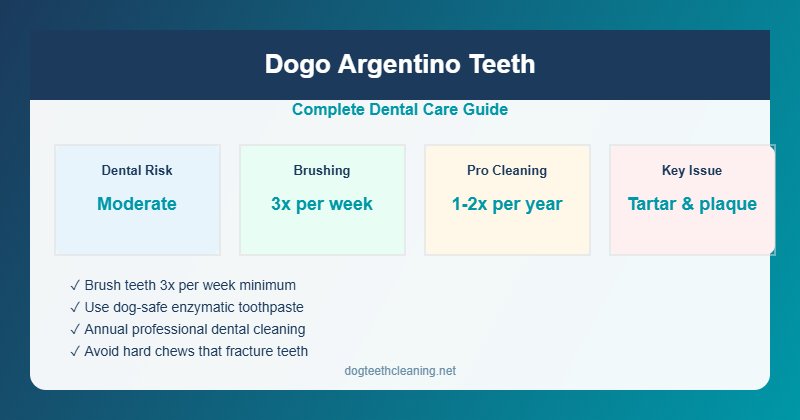
Dogo Argentino Teeth: Anatomy and Dental Profile
Adult Dogo Argentinos have 42 permanent teeth — the standard number for adult dogs across all breeds. These consist of 12 incisors, 4 canines, 16 premolars, and 10 molars. The Dogo Argentino teeth are notably large relative to even other large breeds, with exceptionally strong canines designed for gripping and holding large prey animals. This jaw power, while impressive, makes dental fractures from inappropriate chewing a real concern.
Dogo Argentino puppies are born toothless and develop 28 deciduous baby teeth that begin shedding around 3 to 4 months. Full adult Dogo Argentino teeth are typically in place by 6 to 7 months of age. Because the Dogo is a large, slow-maturing breed, this transition period overlaps with an extended puppyhood during which oral habits — including destructive chewing — can be difficult to control.
According to the American Veterinary Medical Association (AVMA), periodontal disease affects over 80% of dogs by age 3, regardless of breed or size. The Dogo Argentino’s powerful bite and enthusiasm for chewing create a specific fracture risk, while the large surface area of its teeth means significant tartar accumulation is possible without daily care.
How to Brush Dogo Argentino Teeth Safely and Effectively
Brushing is the foundation of maintaining healthy Dogo Argentino teeth. With a breed this powerful, establishing cooperative behavior for oral handling early — during puppyhood — is absolutely essential. An adult Dogo that refuses dental care is far harder to manage than a puppy trained to accept it willingly.
Follow these steps for effective brushing of Dogo Argentino teeth:
- Start early with desensitization: Begin touching your Dogo’s mouth, lifting its lips, and examining its gums from the first weeks of ownership. Build positive associations using high-value treats. Introduce a dog toothbrush and enzymatic toothpaste gradually before beginning full brushing sessions.
- Use appropriate tools: Select a large dog toothbrush with soft bristles or an electric dog toothbrush for more efficient cleaning. Enzymatic toothpaste — available in poultry, beef, or vanilla flavors — contains enzymes that continue fighting bacteria after brushing. Never use human toothpaste, as xylitol and fluoride are toxic to dogs.
- Target high-risk areas: Focus particularly on the outer (buccal) surfaces of the upper carnassial premolars and back molars, where plaque on Dogo Argentino teeth accumulates fastest. The large canines should also be thoroughly brushed around the gum line.
- Angle correctly: Hold the brush at 45 degrees to the gum line and use small circular motions. This dislodges bacteria in the sulcus (the groove between tooth and gum) — the primary site where periodontal disease begins.
- Maintain short, positive sessions: Two minutes per session is sufficient. Always end with a reward. The Dogo Argentino responds well to clear structure and consistent positive reinforcement — traits that make dental training manageable with the right approach.
Warning Signs in Dogo Argentino Teeth That Require Veterinary Attention
Dogo Argentinos are stoic working dogs that often mask discomfort. Monitor Dogo Argentino teeth closely for these warning signs:
- Persistent foul breath: Strong, persistent bad breath signals active bacterial infection or dental disease affecting Dogo Argentino teeth and gum tissue.
- Yellow-brown tartar deposits: Hardened calculus near the gum line requires professional ultrasonic scaling — it cannot be removed by brushing alone.
- Red, swollen, or bleeding gums: Signs of gingivitis, which if untreated progresses to deeper periodontal disease involving bone loss around the tooth roots.
- Fractured or chipped teeth: Dogo Argentinos are powerful chewers; slab fractures of the carnassial premolars are common from inappropriate hard chewing objects. Fractures expose the pulp cavity, creating a pathway for infection.
- Changes in eating behavior: Dropped food, one-sided chewing, or reluctance to chew hard kibble indicate dental pain.
- Facial swelling below the eye: A classic sign of carnassial tooth root abscess — a veterinary emergency.
Professional Dental Cleaning for Dogo Argentinos
Annual professional dental cleanings under general anesthesia are essential for maintaining the long-term health of Dogo Argentino teeth. Professional cleaning removes subgingival tartar that home brushing cannot address, and allows dental radiographs to detect hidden disease — tooth root abscesses, bone loss, and resorptive lesions — before they become severe.
Anesthesia in large, muscular breeds like the Dogo Argentino requires careful drug selection and dosing. Pre-anesthetic bloodwork is essential, and experienced veterinarians will monitor the dog closely throughout the procedure. Healthy adult Dogos tolerate anesthesia well when appropriately screened.
During professional cleaning, the veterinary team scales all surfaces of Dogo Argentino teeth using ultrasonic and hand instruments, probes every tooth’s sulcus for periodontal pocketing, takes full-mouth dental X-rays, and polishes enamel to slow future plaque adhesion. Any teeth deemed non-restorable due to fracture, root exposure, or advanced disease may be extracted at this appointment.
Diet, Chews, and Fracture Risk in Dogo Argentino Teeth
Dietary choices and chewing habits have an outsized impact on Dogo Argentino teeth health given the breed’s powerful jaw and aggressive chewing tendencies.
Dry kibble: Crunchy dry food provides mild mechanical abrasion against tooth surfaces. Some veterinary dental diets — like Hill’s t/d — use specially structured kibble that mechanically cleans Dogo Argentino teeth more effectively than standard kibble by surrounding the tooth before it shatters.
VOHC-certified dental chews: Large-breed VOHC-approved dental chews provide evidence-based plaque and tartar reduction. Choose products appropriately sized for a large, powerful dog. Chews that are too small can be swallowed whole, posing a choking hazard for a breed this size.
Hard chew objects — avoid completely: Cooked bones, raw marrow bones, antlers, hard nylon toys, and ice cubes are frequently responsible for slab fractures in Dogo Argentino teeth. The Dogo’s extraordinary bite force amplifies fracture risk far beyond what most breeds face. A good test: if you can’t dent it with your thumbnail, it’s too hard for safe chewing.
Dogo Argentino Breed Dental Considerations
The Dogo Argentino was developed in the 1920s by Dr. Antonio Nores Martinez in Argentina, primarily from the now-extinct Córdoba Fighting Dog crossed with mastiff-type and other breeds. According to the American Kennel Club (AKC), the Dogo Argentino was bred for big-game hunting of puma and wild boar — demanding work that required formidable jaw strength and pain tolerance. These traits mean the Dogo may continue chewing on hard objects that damage Dogo Argentino teeth despite injury, making environmental management critical.
Dogo Argentinos typically live 9 to 15 years. Given the breed’s long lifespan potential and its tendency toward stoicism when in pain, proactive dental monitoring is especially important. Oral bacteria from advanced periodontal disease can enter the bloodstream and cause damage to the heart, kidneys, and liver — reducing both quality and length of life.
For dogs used in protection or sport work, additional monitoring for tooth wear and micro-fractures is warranted. High-impact bite work places significant stress on specific Dogo Argentino teeth — particularly the canines — and can accelerate wear over time.
Explore our guides on breed-specific dental health and our full dog dental care resource center for more information.
Frequently Asked Questions About Dogo Argentino Teeth
How often should I brush Dogo Argentino teeth?
Daily brushing is the veterinary gold standard for Dogo Argentino teeth. At minimum, three times per week provides meaningful protection. Given the breed’s large tooth surface area, regular brushing is especially important for preventing heavy tartar buildup.
Are Dogo Argentinos prone to broken teeth?
Yes. The Dogo Argentino’s powerful bite makes Dogo Argentino teeth particularly vulnerable to slab fractures from hard chewing objects. Antlers, cooked bones, and hard nylon toys should be avoided entirely. Provide softer, VOHC-approved dental chews instead.
Do Dogo Argentinos need professional dental cleaning?
Yes. Annual professional cleaning under anesthesia removes subgingival tartar and allows full dental radiograph evaluation of all Dogo Argentino teeth, detecting hidden disease that home care cannot address.
Related reading: Great Pyrenees dental care guide