A Complete Dog Teeth Cleaning Guide
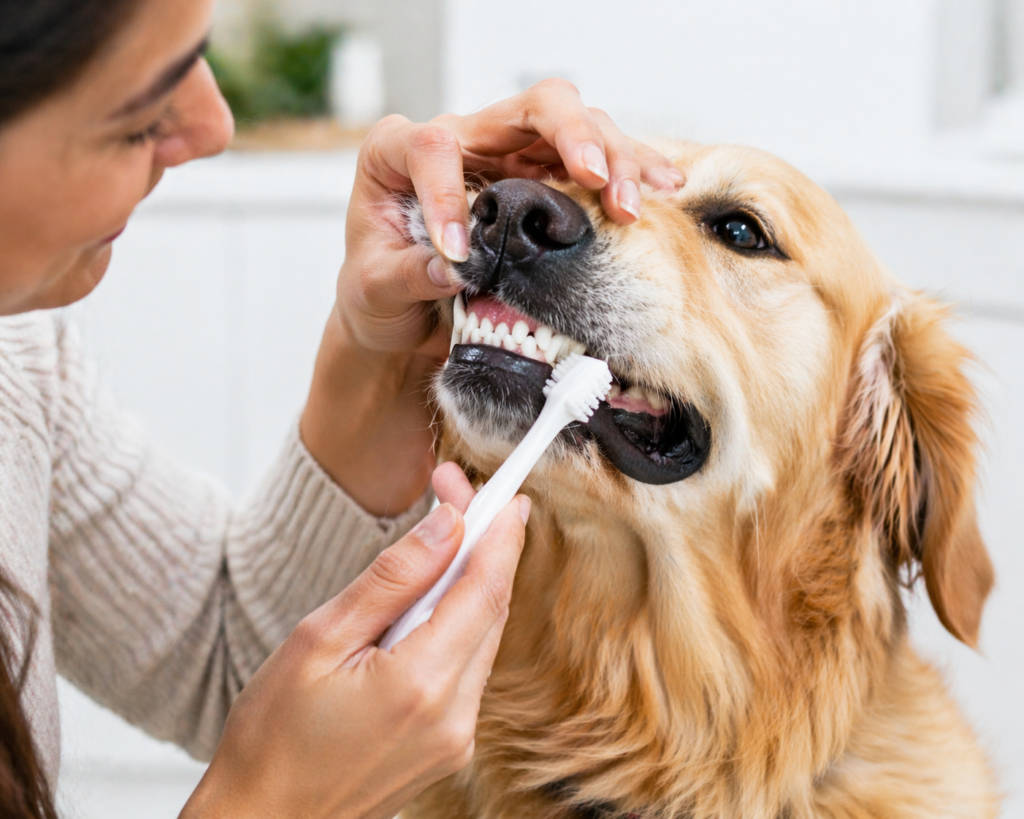
If you have ever asked yourself, how often should you clean your dog’s teeth, you are already asking one of the most important questions in dog health. Many owners focus on food, exercise, grooming, and vaccinations, but forget that dental care is a major part of a dog’s overall wellbeing. In reality, poor oral hygiene can lead to much more than bad breath. It can cause plaque buildup, tartar, gum inflammation, tooth loss, pain, and even health problems that affect the heart, liver, and kidneys.
The simple answer is this: you should brush your dog’s teeth daily if possible. If daily brushing is not realistic, aim for at least three times per week. Anything less than that makes it much easier for plaque to harden into tartar. Once tartar forms, normal brushing is no longer enough, and professional veterinary cleaning may be required.
That said, not every dog needs the exact same dog teeth cleaning schedule. The ideal frequency depends on your dog’s age, breed, size, diet, chewing habits, and current dental condition. A small senior dog that eats soft food may need much more frequent care than a young large-breed dog that already has a good routine. That is why the best approach is not to memorize one rule, but to understand how dog teeth cleaning works and how to adjust it to your dog.
In this guide, you will learn how often to clean your dog’s teeth, why it matters so much, what signs show your dog needs more dental care, and how to create a practical dog teeth cleaning routine at home.
How Often Should You Clean Your Dog’s Teeth?
The best dog teeth cleaning schedule looks like this:
- Ideal: brush your dog’s teeth every day
- Minimum goal: brush at least 3 times per week
- Professional cleaning: every 6 to 12 months if recommended by your vet
Daily brushing is considered the gold standard because plaque starts forming very quickly after meals. If you remove that soft plaque before it hardens, you greatly reduce the risk of tartar and gum disease. If you only brush once in a while, the cleaning will help a little, but it usually will not be enough to stop the long-term buildup that causes dental disease.
Think of dog teeth cleaning the same way you think about your own dental care. If you brushed your teeth only once every few days, you would expect problems sooner or later. Dogs are no different, except that many of them are even more prone to oral disease because owners do not notice the early signs until the issue becomes serious.
Why Dog Teeth Cleaning Is So Important
Dog teeth cleaning is not just about making your dog’s breath smell better. It is a health issue. When food particles and bacteria stay on the teeth, they form plaque. Over time, plaque hardens into tartar. Tartar irritates the gums, and that can lead to gingivitis. If the condition continues, the dog may develop periodontal disease, which damages the tissues that support the teeth.
This process can cause pain long before owners notice obvious symptoms. Dogs are often good at hiding discomfort. A dog with dental disease may continue eating and acting normal while still experiencing chronic irritation in the mouth. By the time a dog shows clear signs such as drooling, refusing food, bleeding gums, or loose teeth, the problem is often much more advanced than it appears.
Regular dog teeth cleaning offers several benefits:
- helps prevent plaque and tartar buildup
- reduces bad breath
- supports healthy gums
- lowers the risk of tooth loss
- reduces the chance of painful infections
- may lower long-term veterinary costs
- supports better overall health
Good oral hygiene is one of the simplest ways to improve your dog’s comfort and quality of life. Many expensive dental problems can be reduced or delayed by a consistent routine at home.
Dog Teeth Cleaning by Age
Age is one of the biggest factors when deciding how often to clean your dog’s teeth.
Puppies
Puppies should begin learning the routine early. Even though puppy teeth are temporary, this stage is the best time to introduce brushing. The goal is not just cleaning. The goal is training. A puppy that gets used to a toothbrush, dog-safe toothpaste, and mouth handling will be much easier to care for as an adult.
For puppies, brushing a few times per week is usually a good starting point. Keep sessions short and positive. Use praise, patience, and rewards. Building the habit early often matters more than brushing perfectly.
Adult Dogs
Adult dogs usually need the most consistent care because this is the stage where plaque buildup becomes a real long-term issue. For most adult dogs, daily brushing is ideal, and three or more times per week should be treated as the minimum standard.
This is also the stage where owners should pay more attention to warning signs such as bad breath, yellow or brown buildup near the gumline, and red or swollen gums.
Senior Dogs
Senior dogs often need even more attention. As dogs age, they become more likely to develop dental disease, worn teeth, gum recession, and sensitivity. Daily dog teeth cleaning is especially valuable at this stage, but it should be done gently. Older dogs may also benefit from more frequent dental checkups and professional cleanings if your vet recommends them.
Does Breed Affect How Often You Should Clean Your Dog’s Teeth?
Yes, breed and size matter a lot. Small breeds are especially prone to dental disease. Dogs such as Chihuahuas, Yorkshire Terriers, Pomeranians, Maltese, Dachshunds, and Shih Tzus often have crowded teeth in small mouths. That crowding makes it easier for plaque and tartar to build up in tight spaces.
If you own a small breed, daily dog teeth cleaning is strongly recommended. These dogs often develop dental issues earlier than larger breeds, and skipping routine care can lead to serious problems surprisingly fast.
Larger breeds are not immune, but they often have a bit more spacing between teeth, which may reduce the speed of buildup in some cases. Still, they should not be ignored. A large dog can still suffer from gum disease, cracked teeth, bad breath, and oral pain. Even if your dog is a strong chewer and seems to keep teeth cleaner naturally, brushing is still important.
How Diet Changes Dog Teeth Cleaning Needs
Your dog’s diet can also affect how often you should clean their teeth. Soft, sticky foods tend to cling to the teeth more than dry foods do. Dogs that eat mostly wet food or receive frequent soft treats may need more consistent dog teeth cleaning because residue stays on the teeth longer.
Dry kibble is not a replacement for brushing, but in some cases it may help reduce how much soft material sticks to the teeth. Some specially formulated dental diets may also support oral health. Still, even dogs on those diets should have their teeth brushed regularly.
Treats matter too. If your dog gets table scraps, sugary foods, or frequent soft snacks, that can contribute to plaque formation. On the other hand, some dental chews may provide minor support when used properly. The key point is simple: no diet eliminates the need for dog teeth cleaning.
Signs Your Dog’s Teeth Need More Frequent Cleaning
Some dogs clearly show that their current routine is not enough. Watch for these signs:
- persistent bad breath
- yellow or brown buildup on the teeth
- red, swollen, or bleeding gums
- difficulty chewing
- dropping food while eating
- drooling more than usual
- pawing at the mouth
- reluctance to let you touch the face
If you notice one or more of these symptoms, your dog may need more frequent care, a better routine, or a professional dental evaluation. Home dog teeth cleaning is helpful, but it cannot always reverse established tartar or advanced disease.
Daily vs. Weekly Dog Teeth Cleaning
Many owners want to know whether brushing every day really makes that much difference. In most cases, yes, it does. Daily brushing removes plaque before it hardens. Brushing only once or twice a week may slow the problem, but it often will not control it well enough, especially in small breeds or dogs that are already prone to dental issues.
If daily brushing sounds overwhelming, the practical solution is to start small. Even brushing for a short time most days is better than doing a long perfect session once in a while. Consistency matters more than perfection. A realistic routine you can follow is better than an ideal routine you never maintain.
What You Need for Dog Teeth Cleaning at Home
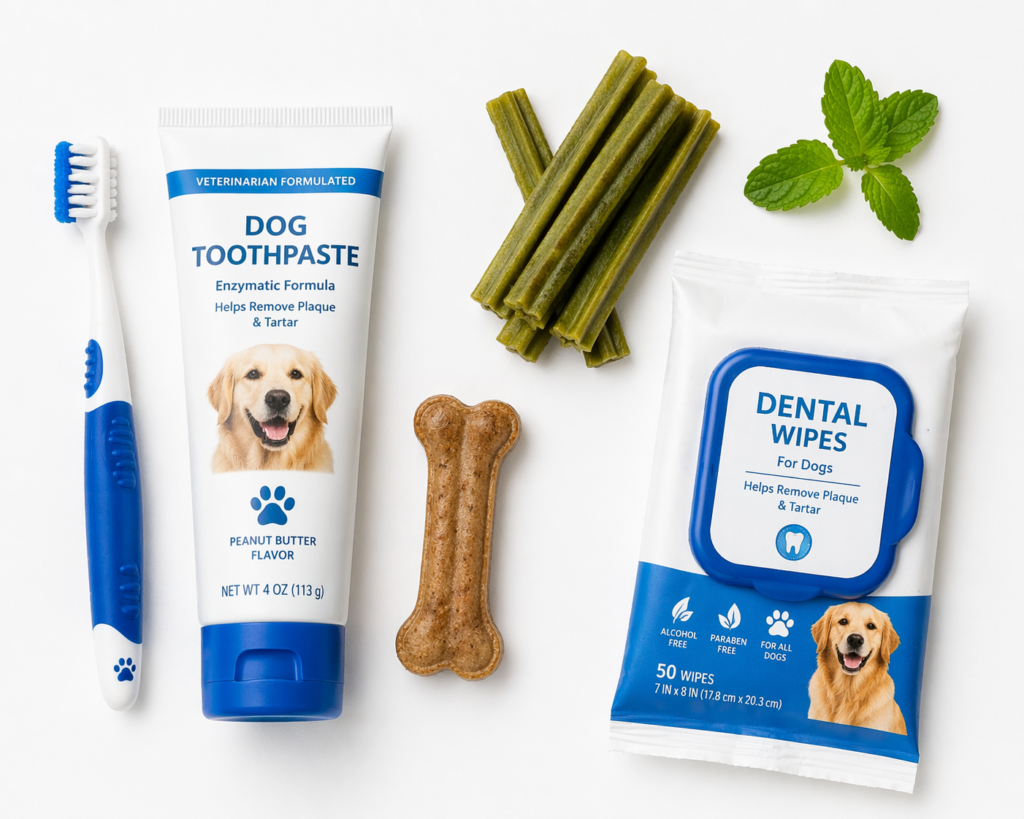
A good dog teeth cleaning routine starts with the right tools. Never use human toothpaste for dogs. Human toothpaste can contain ingredients that are not safe for pets to swallow. Instead, use a toothpaste specifically made for dogs.
Useful tools include:
- dog toothbrush with soft bristles
- finger toothbrush for dogs that dislike standard brushes
- dog-safe toothpaste
- dental wipes for light support
- approved dental chews as an extra aid
Toothbrush choice depends on your dog. Some owners prefer a long-handled brush for better reach, while others find a finger brush easier when starting. The important thing is choosing something gentle, safe, and easy to use consistently.
How to Brush Your Dog’s Teeth Properly
If you want dog teeth cleaning to work, technique matters. You do not need to scrub aggressively. In fact, brushing too hard can irritate the gums and make your dog resist the process.
Here is a simple step-by-step method:
- Let your dog taste the dog-safe toothpaste first.
- Lift the lip gently and expose the outer surfaces of the teeth.
- Brush using small circular motions.
- Focus on the gumline, where plaque tends to collect most.
- Keep the session short and calm.
- Reward your dog immediately afterward.
You do not always need to clean every inner surface perfectly, especially at first. In many dogs, the outer surfaces are the most realistic and most important starting point. Once your dog becomes comfortable, you can gradually improve the routine.
Common Dog Teeth Cleaning Mistakes
Many owners try to care for their dog’s teeth but still make mistakes that reduce results. Avoid these common problems:
- using human toothpaste
- brushing too rarely
- being too rough
- waiting until the dog already has severe tartar
- assuming dental chews can replace brushing
- quitting too early because the dog resists at first
One of the biggest mistakes is inconsistency. Dog teeth cleaning works best when it becomes a normal part of life. If brushing happens only when you remember it, your dog never fully adapts and the dental benefits stay limited.
Can Dental Chews Replace Brushing?
No. Dental chews can support dog teeth cleaning, but they should not replace brushing. Some dental products may help reduce plaque slightly or freshen breath, but they do not clean the teeth as thoroughly as a brush and toothpaste can. Treat them as a helpful extra, not as the foundation of dental care.
The same is true for water additives and dental wipes. These tools may have a place in your routine, especially for dogs that are still learning, but they are not equal to proper brushing.
How Often Should a Vet Clean Your Dog’s Teeth?
Even with good home care, some dogs still need professional dental cleanings. The frequency depends on the dog. Some dogs may only need a veterinary cleaning once a year. Others, especially small breeds or dogs with a history of dental disease, may need it every six months.
Professional cleaning is important because it can remove tartar from areas that home brushing cannot fully treat, including below the gumline. It also gives your veterinarian a chance to check for loose teeth, infections, fractures, gum recession, and other hidden problems.
If your dog already has visible tartar, bleeding gums, or severe bad breath, do not assume brushing alone will solve it. Home dog teeth cleaning is excellent for prevention, but advanced buildup usually needs veterinary care.
How to Build a Realistic Dog Teeth Cleaning Routine
The best dog teeth cleaning routine is one you can actually maintain. For most owners, this means choosing a specific time of day and keeping the process simple. You might brush after the evening walk, before bedtime, or after dinner. The exact time does not matter as much as consistency.
Here is an easy routine that works for many dog owners:
- brush daily if possible
- if daily is not realistic, choose Monday, Wednesday, Friday, and Sunday
- use praise and rewards every time
- check the gums and teeth once a week for changes
- schedule regular vet dental checkups
This approach makes dog teeth cleaning feel manageable instead of overwhelming. Once it becomes a habit, it usually takes only a few minutes.
Final Answer: How Often Should You Clean Your Dog’s Teeth?

If you want the clearest possible answer, it is this: clean your dog’s teeth every day if you can. If daily brushing is not possible, aim for at least three times per week. For dogs that are small, older, prone to dental issues, or eating softer diets, daily dog teeth cleaning is especially important.
Do not wait for bad breath, tartar, or bleeding gums before taking dental care seriously. By the time those signs are obvious, the problem may already be advanced. Starting a routine early is easier, cheaper, and better for your dog’s comfort.
Dog teeth cleaning is one of the highest-value habits you can build as a pet owner. It helps protect your dog from pain, supports long-term health, and can save you from more serious dental treatment later. A few minutes of brushing several times a week can make a major difference over the course of your dog’s life.