Caring for your Karelian Bear Dog‘s teeth is one of the most important things you can do for their long-term health. Dental disease affects over 80% of dogs by age three, and karelian bear dog teeth care requires a breed-specific approach.
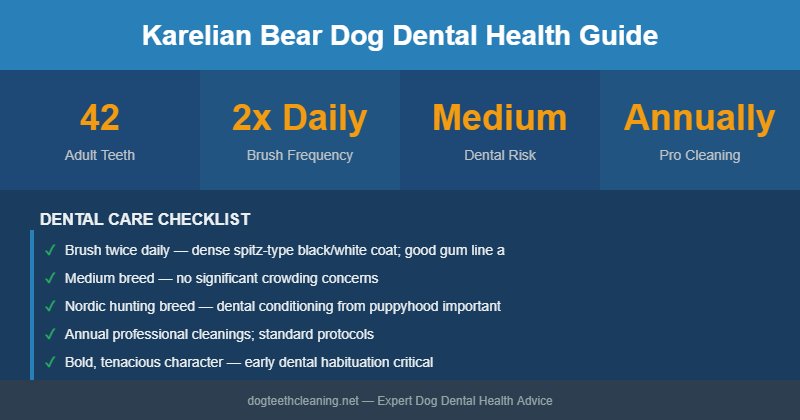
Karelian Bear Dog Dental Anatomy & Risk Profile
The Karelian Bear Dog is a bold Finnish-Karelian spitz-type hunting breed, weighing 44 to 49 pounds, developed for hunting large and dangerous game including bear, moose, wild boar, and lynx. The breed has a moderate-length muzzle providing good jaw space for all 42 permanent adult teeth with no significant crowding. The dense, double black-and-white coat lies flat near the gum line. Dental disease risk is moderate — consistent with medium Nordic hunting breeds.
How to Brush Your Karelian Bear Dog’s Teeth
Brush your Karelian Bear Dog’s teeth twice daily using a medium toothbrush or finger brush with enzymatic dog toothpaste. The dense coat provides good gum line access. Work at a 45-degree angle. Karelian Bear Dogs are bold, independent, and tenacious — dental conditioning from early puppyhood is critical before this breed’s formidable prey drive and independence become established.
Warning Signs of Dental Disease in Karelian Bear Dogs
Moderate dental disease risk consistent with medium Nordic hunting breeds. Signs include persistent bad breath, tartar buildup, gum redness or bleeding, and reduced appetite.
Professional Dental Cleanings for Karelian Bear Dogs
Annual professional dental cleanings for Karelian Bear Dogs with excellent home care. Standard anesthetic protocols are appropriate.
Diet and Dental Health for Karelian Bear Dogs
High-quality complete diet for a medium active hunting breed. Dry kibble, VOHC-approved dental chews, water additives.
Breed Notes: Karelian Bear Dog
The Karelian Bear Dog is a national treasure in Finland, bred for millennia in the Karelia region (straddling Finland and Russia) as a courageous hunter of dangerous large game. AKC Foundation Stock Service recognition. Used today by national parks and wildlife agencies for non-lethal bear management. Lifespan 11–13 years.
For authoritative veterinary dental guidelines, see the AVMA pet dental care guide and the AKC Karelian Bear Dog breed page.
Frequently Asked Questions: Karelian Bear Dog Teeth
Is the Karelian Bear Dog actually used to hunt bears?
Yes — the Karelian Bear Dog has been used for centuries to hunt bear, moose, and other large game. Today it is also used by national parks, wildlife agencies, and wind energy companies as a non-lethal tool to deter bears and other wildlife from human settlements.
How often should Karelian Bear Dogs have professional dental cleanings?
Annual cleanings for dogs with excellent home care. Standard anesthetic protocols are appropriate for this medium-breed.
Is the Karelian Bear Dog aggressive?
The Karelian Bear Dog is bold and fearless in the field but is typically loyal and manageable with its family. Early socialization is important. The breed has a strong prey drive requiring careful management around other animals.
Is the Karelian Bear Dog AKC recognized?
The Karelian Bear Dog is recognized through the AKC Foundation Stock Service (FSS) and has full recognition with the Finnish Kennel Club (FKC) and FCI.