Italian Greyhound teeth represent one of the most significant health challenges facing this elegant, delicate sighthound breed. The Italian Greyhound (IG) has among the highest rates of dental disease of any dog breed, largely due to its small jaw size, naturally thin enamel, and genetic predisposition toward periodontal disease. Understanding how to properly care for Italian Greyhound teeth from puppyhood is not optional for this breed — it is one of the most critical aspects of Italian Greyhound ownership.
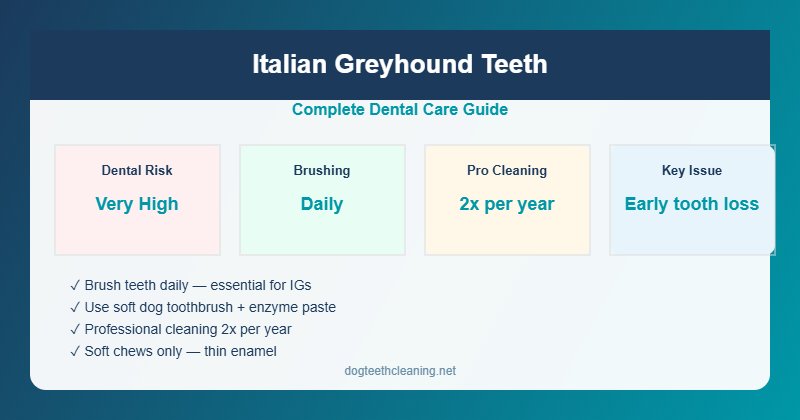
Italian Greyhound Teeth: Why This Breed Has Exceptional Dental Risk
Adult Italian Greyhounds have 42 permanent teeth — the same number as much larger breeds — crammed into a very narrow, elongated jaw. This extreme tooth crowding is one primary driver of elevated dental disease risk in Italian Greyhound teeth. Crowded teeth create abundant plaque-retaining surfaces, trap food debris in tight interdental spaces, and make thorough brushing significantly more challenging.
Beyond crowding, Italian Greyhounds are genetically predisposed to thinner-than-average enamel on their Italian Greyhound teeth. Thin enamel provides less protection against acid and bacterial attack, accelerating the progression from plaque to periodontal disease. Additionally, the IG’s fine bone structure means the mandible (lower jaw) can be severely weakened by periodontal bone loss — to the point of pathological fracture in severe, neglected cases.
According to the American Veterinary Medical Association (AVMA), periodontal disease is the most common health condition affecting adult dogs. For Italian Greyhounds, this disease can begin as early as 1 to 2 years of age without daily preventive care — far earlier than in most other breeds.
Daily Brushing for Italian Greyhound Teeth: A Non-Negotiable Routine
For Italian Greyhound teeth, daily brushing is not a recommendation — it is a necessity. Three times per week (acceptable for most breeds) is genuinely insufficient for the IG’s exceptional dental disease risk. Italian Greyhound owners who brush only a few times per week will still see rapid plaque and tartar accumulation between sessions due to the breed’s unique risk factors.
Here is a step-by-step guide for daily brushing of Italian Greyhound teeth:
- Begin in puppyhood — immediately: Italian Greyhounds must be conditioned to tooth brushing from 8 to 10 weeks of age. Introduce oral handling gradually with positive reinforcement, progressing from finger touches on the gums to a soft finger brush, then to a small toothbrush. The breed’s sensitive temperament means any negative association formed early can make brushing permanently difficult.
- Choose the right brush and paste: Use a very soft-bristled small dog or cat toothbrush — the IG’s narrow muzzle requires a small brush head for access. Enzymatic dog toothpaste provides antibacterial action that continues working after brushing. Never use human toothpaste; xylitol is extremely toxic to dogs and particularly dangerous given the IG’s small size.
- Be gentle with thin enamel: Italian Greyhound enamel is thinner than most breeds. Use soft, controlled strokes — not aggressive scrubbing. Firm pressure or a hard-bristled brush risks enamel erosion on already vulnerable Italian Greyhound teeth.
- Cover all surfaces methodically: The narrow jaw and tight interdental spacing of Italian Greyhound teeth demand a methodical approach. Work section by section — upper left, upper right, lower left, lower right — to ensure every tooth surface is addressed in each session.
- Always end positively: Italian Greyhounds are sensitive, emotionally responsive dogs. Ending every brushing session with affection, gentle play, or a small treat creates a positive association critical for long-term compliance.
Warning Signs in Italian Greyhound Teeth Requiring Urgent Veterinary Care
Italian Greyhound owners must be highly vigilant. This breed may not display obvious pain even with advanced dental disease. Never ignore these warning signs in Italian Greyhound teeth:
- Bad breath: Even mild persistent bad breath in an IG warrants a dental examination — the breed’s disease progression is faster than in most breeds, and early intervention makes a significant difference.
- Visible tartar: Any yellow or brown deposits on Italian Greyhound teeth, especially near the gum line, indicate professional cleaning is needed. Do not delay.
- Gum recession: When gum tissue pulls away from the tooth root, it exposes the cementum — a softer dental tissue with less protection than enamel. Recession in Italian Greyhound teeth is often a sign of advancing periodontal bone loss.
- Loose teeth: Tooth loosening in an IG is a serious sign of advanced periodontal disease. Given the breed’s fine jaw bones, adjacent bone support structures are frequently compromised around affected teeth.
- Jaw swelling or facial asymmetry: May indicate a tooth root abscess or, in severe cases, beginning stages of mandibular weakening from bone loss around Italian Greyhound teeth.
- Behavioral changes around eating: Preference for soft food, reluctance to chew, dropping kibble, or pawing at the mouth indicate dental pain.
Professional Dental Cleaning for Italian Greyhounds
Italian Greyhounds should receive professional dental cleanings under anesthesia at least twice per year — more frequently than most breeds. Given the exceptional rate at which Italian Greyhound teeth accumulate subgingival tartar and develop periodontal pocketing, annual cleaning is insufficient for many individuals in this breed.
Full-mouth dental radiographs are particularly critical for Italian Greyhounds because bone loss around tooth roots significantly precedes visible external signs. X-rays allow the veterinary team to detect and treat disease before it progresses to tooth loss or jaw fracture — outcomes that are much more difficult and costly to manage than early disease.
Many Italian Greyhound owners express concern about anesthesia in this lean, low-body-fat breed. Italian Greyhounds do metabolize some anesthetic drugs differently than breeds with higher body fat percentages. Experienced veterinarians will select and dose anesthetic agents accordingly, using protocols appropriate for sighthound breeds. Proper pre-anesthetic screening and sighthound-appropriate anesthetic protocols make professional cleaning safe and far less risky than untreated periodontal disease.
Diet and Chew Choices for Italian Greyhound Dental Health
Diet and chew choices are especially impactful for Italian Greyhound teeth given the breed’s elevated baseline risk.
Dry kibble: Standard dry kibble provides mild mechanical cleaning on Italian Greyhound teeth. Some IGs are picky eaters or have difficulty with larger kibble pieces — small breed kibble sized appropriately for a toy dog is preferable to ensure the dog chews rather than swallowing whole.
VOHC-approved small-breed dental chews: Choose only VOHC-certified chews sized for toy breeds. Oversized chews present a choking risk for the IG and are chewed ineffectively. Chews should be soft enough not to risk fracturing thin Italian Greyhound teeth enamel.
Absolutely avoid all hard chews: Hard chew items including bones, antlers, hard nylon toys, and ice cubes carry a dual risk for Italian Greyhounds: enamel fracture (which is catastrophic given thin enamel) and jaw fracture in dogs with compromised bone density from periodontal disease. For this breed, no hard chews should ever be provided.
Italian Greyhound Breed Dental Notes
The Italian Greyhound is an ancient sighthound breed with a history spanning thousands of years, depicted in art from ancient Egypt and Greece. According to the American Kennel Club (AKC), the Italian Greyhound is the smallest sighthound breed, weighing 7 to 14 pounds and prized for its elegance, affectionate temperament, and remarkable speed. The breed typically lives 14 to 15 years — an impressively long lifespan during which dental disease has extensive time to cause compounding damage to Italian Greyhound teeth and systemic organs.
Experienced Italian Greyhound breeders and owners consistently list dental disease as one of the top health concerns for the breed. Unlike many breed-specific health issues that require specialized diagnostics, dental disease in Italian Greyhound teeth is largely preventable through daily owner commitment to oral hygiene. The investment of daily brushing over this breed’s long lifespan pays enormous dividends in quality of life and reduced veterinary costs.
For additional breed dental resources, visit our breed dental health guides and comprehensive dog dental care center.
Frequently Asked Questions About Italian Greyhound Teeth
How often should Italian Greyhound teeth be brushed?
Daily brushing is essential for Italian Greyhound teeth — not optional. The breed’s thin enamel, jaw crowding, and genetic predisposition to periodontal disease mean that anything less than daily brushing allows disease to progress rapidly.
Why do Italian Greyhound teeth have such high dental disease risk?
Three primary factors: (1) extreme crowding of 42 teeth in a very small jaw, (2) thinner-than-average enamel on Italian Greyhound teeth, and (3) a genetic predisposition to rapid periodontal disease progression that is well recognized within the breed community.
Is anesthesia safe for Italian Greyhounds during dental cleaning?
Yes, with appropriate sighthound-specific anesthetic protocols. Italian Greyhounds metabolize some drugs differently due to their low body fat, but experienced veterinarians use adjusted protocols that make anesthesia safe. Professional cleaning is far safer than leaving Italian Greyhound teeth disease untreated.
Related reading: Miniature Pinscher dental care guide