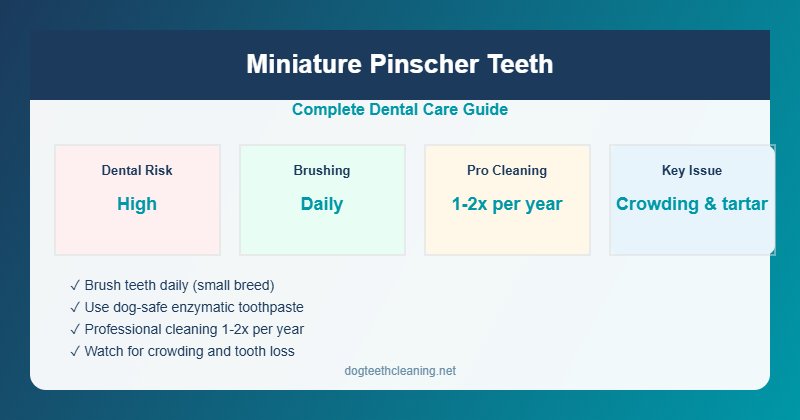
Miniature Pinscher teeth are one of the most critical health considerations for owners of this bold, spirited toy breed. Like most small and toy breeds, the Miniature Pinscher (Min Pin) faces a significantly elevated risk of dental disease compared to larger dogs. The relatively small jaw creates crowded Miniature Pinscher teeth, trapping plaque and food debris in tight spaces that are difficult to clean and that accelerate tartar formation and periodontal disease without daily preventive care.
Miniature Pinscher Teeth: Anatomy and Dental Disease Risk
Adult Miniature Pinschers have 42 permanent teeth — the same number as much larger breeds. This means all 42 teeth must fit into a significantly smaller jaw, resulting in crowding that is one of the primary drivers of dental disease risk in Miniature Pinscher teeth. Crowded teeth create more surface area where plaque can adhere, more sites where food becomes trapped, and harder-to-reach spaces during brushing.
Min Pin puppies begin with 28 deciduous teeth that fall out between 3 and 4 months of age. Full adult Miniature Pinscher teeth are typically in place by 6 to 7 months. Retained deciduous teeth — baby teeth that don’t fall out as adult teeth erupt — are more common in toy breeds and should be addressed promptly by a veterinarian to prevent worsening crowding.
According to the American Veterinary Medical Association (AVMA), small and toy breed dogs face disproportionately high rates of periodontal disease — often developing significant gum disease by age 2 or 3 without preventive care. For the Miniature Pinscher, this means dental hygiene must begin in puppyhood and be maintained consistently throughout the dog’s life.
How to Brush Miniature Pinscher Teeth: Daily Routine
Daily brushing is the single most effective prevention for Miniature Pinscher teeth disease — and given the breed’s elevated dental risk, daily is not optional but essential. Miniature Pinschers are alert, curious, and can be headstrong, but they are also highly responsive to consistent training and positive reinforcement, which makes establishing a brushing routine achievable with patience.
Follow these steps for successful daily brushing of Miniature Pinscher teeth:
- Start immediately in puppyhood: Begin handling your Min Pin’s mouth from 8 weeks of age. Lift the lips, touch the gums, and examine the teeth daily as part of your handling routine. The earlier this becomes normal for your dog, the easier adult brushing will be.
- Use appropriate tools: Select a small dog or finger brush with soft bristles — sized for a toy breed’s small mouth. Enzymatic dog toothpaste in an appealing flavor (poultry, beef, or peanut butter) provides ongoing antibacterial activity. Never use human toothpaste; xylitol and fluoride are highly toxic to dogs.
- Focus on the gum line: The bacteria that cause periodontal disease live in the sulcus — the groove between tooth and gum. Angle the brush at 45 degrees to the gum line and use small circular motions to disrupt this bacterial film on Miniature Pinscher teeth.
- Prioritize difficult areas: The upper premolars and molars, as well as the space between the upper canines and premolars, are highest-risk sites in Miniature Pinscher teeth due to tight spacing. Spend extra time in these areas.
- Keep sessions short and positive: One to two minutes per session is sufficient. Always follow brushing with a high-value reward. Consistency and positivity transform brushing from a struggle into a tolerated or even anticipated routine.
If your Min Pin resists brushing, consider working with a trainer or veterinary behaviorist to establish cooperative handling. The long-term health payoff of daily brushing justifies the investment of time to properly condition your dog to accept it.
Warning Signs in Miniature Pinscher Teeth That Need Veterinary Attention
Small breed owners must be especially vigilant. Min Pins often don’t show obvious pain until dental disease is advanced. Watch for these warning signs in Miniature Pinscher teeth:
- Bad breath: Strong, persistent bad breath is the most common early sign of bacterial activity in Miniature Pinscher teeth and gum tissue.
- Visible tartar: Yellow or brown deposits on the tooth surfaces — especially near the gum line — indicate that professional cleaning is overdue.
- Red, swollen, or bleeding gums: Gingivitis causes gum inflammation and bleeding on brushing or examination — the earliest stage of periodontal disease.
- Loose teeth: Advanced periodontal bone loss causes teeth to loosen and eventually fall out — a common outcome in neglected Miniature Pinscher teeth. Toy breeds frequently lose multiple teeth to untreated dental disease.
- Jaw bone fractures: Severe periodontal disease in small breeds can weaken the mandible to the point of pathological fracture — a serious condition most commonly seen at extraction sites in dogs with advanced bone loss.
- Reluctance to eat or favoring soft food: Behavioral changes around eating are often the first sign of dental pain in Min Pins, who may compensate by avoiding hard kibble.
Professional Dental Cleaning for Miniature Pinschers
Due to the Miniature Pinscher’s elevated dental disease risk, professional cleaning once or twice per year is strongly recommended. Professional cleanings under general anesthesia allow the veterinary team to safely remove subgingival tartar from crowded Miniature Pinscher teeth, probe for periodontal pocketing, and take dental radiographs to evaluate the roots and bone.
Dental radiographs are particularly important in small breeds because the roots of Miniature Pinscher teeth are relatively long compared to tooth crown height. Significant bone loss and root involvement can be present without obvious external signs visible during a conscious exam. X-rays are the only reliable way to detect this hidden disease.
Owners of toy breeds sometimes worry more about anesthesia risk in their small dogs. However, anesthesia complications in appropriately screened, healthy Min Pins are rare. Pre-anesthetic bloodwork and careful drug dosing tailored to small body weight make anesthesia safe. The risk of untreated dental disease — including systemic organ damage from oral bacteria — far exceeds the carefully managed risk of professional dental care under anesthesia.
Diet, Chews, and Small-Breed Dental Supplements
Dietary choices and supplemental dental products play a meaningful supporting role in managing the elevated dental risk of Miniature Pinscher teeth.
Dry kibble: Crunchy dry food provides mild mechanical abrasion against Miniature Pinscher teeth during chewing. Small-breed-specific dry kibble sized appropriately for a small mouth is preferable to standard large-breed kibble, which some Min Pins swallow without chewing. Kibble that the dog must bite through (rather than swallowing whole) provides the most cleaning benefit.
VOHC-certified small-breed dental chews: The Veterinary Oral Health Council (VOHC) certifies dental products with proven efficacy. Choose VOHC-approved chews specifically sized for toy or small breeds — oversized chews present a choking risk and are chewed ineffectively by small dogs.
Water additives: Antiseptic water additives containing chlorhexidine or cetylpyridinium chloride reduce the bacterial count in the mouth, supplementing brushing on busy days when a full session isn’t possible for Miniature Pinscher teeth.
Miniature Pinscher Breed Dental Notes
The Miniature Pinscher is a German breed with a history dating to the 18th century or earlier, developed as a ratter and companion dog. Despite a superficial resemblance to a miniature Doberman Pinscher, the Min Pin is a distinct breed with its own lineage. According to the American Kennel Club (AKC), the Miniature Pinscher is a bold, energetic, and fearless dog known for the “hackney gait” — a distinctive high-stepping walk. The breed typically lives 12 to 16 years — a long lifespan during which dental disease can progressively damage not just Miniature Pinscher teeth but also the heart, kidneys, and liver through systemic bacterial spread.
Small breeds like the Min Pin are more likely to develop severe periodontal disease earlier than large breeds, and more likely to experience tooth loss and jaw bone complications if dental disease is neglected. Starting daily brushing in puppyhood and maintaining professional cleaning appointments are the most impactful steps you can take to protect Miniature Pinscher teeth throughout your dog’s long life.
For more breed-specific dental guides, see our breed dental health resource and complete dog dental care guide.
Frequently Asked Questions About Miniature Pinscher Teeth
Why do Miniature Pinscher teeth have a higher dental disease risk?
The small jaw of the Miniature Pinscher causes 42 adult teeth to be crowded together, creating tight spaces where plaque accumulates rapidly and that are difficult to clean effectively. This crowding is the primary reason Miniature Pinscher teeth face a higher periodontal disease risk than large breeds.
How often should I brush Miniature Pinscher teeth?
Daily brushing is essential for Miniature Pinscher teeth — not optional. Small breeds develop plaque and tartar more quickly than large breeds, and the consequences of dental neglect are more severe, including early tooth loss and jaw bone damage.
Do Miniature Pinschers lose teeth early?
Yes — without consistent dental care. Miniature Pinscher teeth are highly susceptible to periodontal bone loss that leads to tooth loosening and early tooth loss, often by middle age in dogs without regular brushing and professional cleaning.
Related reading: German Shorthaired Pointer dental care guide