Caring for your Dogue de Bordeaux‘s teeth is one of the most important things you can do for their long-term health. Dental disease affects over 80% of dogs by age three, and dogue de bordeaux teeth care requires a breed-specific approach.
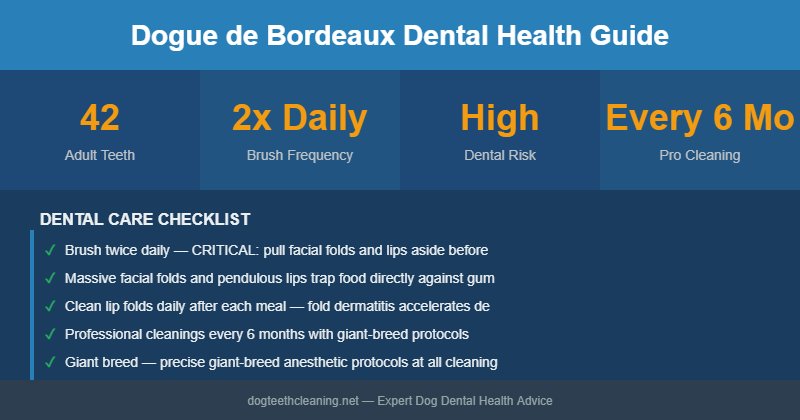
Dogue de Bordeaux Dental Anatomy & Risk Profile
The Dogue de Bordeaux (French Mastiff) is one of the most ancient French dog breeds, a giant, massively built dog weighing 99 to 110+ pounds with an extraordinarily large, broad head. The most critical dental consideration is the breed’s extreme facial structure: massive pendulous lips, deep facial skin folds, and a very broad, short muzzle create severe food-trapping conditions directly against the gum line. These folds must be pulled aside and cleaned daily. Dental disease risk is high — brachycephalic facial structure concentrates bacteria, and giant-breed anesthetic protocols are required.
How to Brush Your Dogue de Bordeaux’s Teeth
Brush your Dogue de Bordeaux’s teeth twice daily using a large toothbrush or finger brush with enzymatic dog toothpaste. CRITICAL: pull all facial folds and pendulous lips fully aside to expose the entire gum line — this is the most important step for this breed. Clean the lip fold grooves after every meal. Work at a 45-degree angle at the gum line. Dogues de Bordeaux are calm, loyal, and affectionate — dental conditioning from early puppyhood is important.
Warning Signs of Dental Disease in Dogue de Bordeauxs
High dental disease risk due to massive food-trapping facial folds and brachycephalic jaw compression. Daily lip fold cleaning is essential. Signs include persistent bad breath, fold discharge, fold odor, tartar buildup, gum redness. Giant-breed anesthetic protocols required at all cleanings.
Professional Dental Cleanings for Dogue de Bordeauxs
Professional dental cleanings every 6 months. Giant-breed anesthetic protocols with very precise weight-based dosing required. Brachycephalic airway complications require an experienced anesthetist.
Diet and Dental Health for Dogue de Bordeauxs
High-quality complete diet for a giant breed. Large, slow-eating appropriate kibble. VOHC-approved dental chews for giant breeds. Water additives.
Breed Notes: Dogue de Bordeaux
The Dogue de Bordeaux is one of France’s oldest dog breeds with a history dating back centuries. Best known internationally through the 1989 film “Turner & Hooch.” AKC recognition 2008. Expected lifespan is 5–8 years — one of the shorter-lived giant breeds.
For authoritative veterinary dental guidelines, see the AVMA pet dental care guide and the AKC Dogue de Bordeaux breed page.
Frequently Asked Questions: Dogue de Bordeaux Teeth
Why does the Dogue de Bordeaux need such frequent dental cleanings?
The Dogue de Bordeaux’s massive pendulous lips and deep facial folds trap food directly against the gum line after every meal, creating a warm, moist, food-rich environment where bacteria multiply rapidly. Combined with the brachycephalic jaw structure, this accelerates periodontal disease significantly faster than in other giant breeds.
How often should Dogue de Bordeaux have professional dental cleanings?
Every 6 months, given the breed’s elevated dental risk from facial folds. Giant-breed and brachycephalic anesthetic protocols are required.
Is the Dogue de Bordeaux the same as the French Mastiff?
Yes — Dogue de Bordeaux is the French name; French Mastiff is the English name for the same breed. They are identical.
What is the Dogue de Bordeaux’s lifespan?
The Dogue de Bordeaux has an average lifespan of 5–8 years, making it one of the shortest-lived giant breeds. Health monitoring throughout their relatively brief life is especially important.