Caring for your Korean Jindo‘s teeth is one of the most important things you can do for their long-term health. Dental disease affects over 80% of dogs by age three, and jindo dog teeth care requires a breed-specific approach.
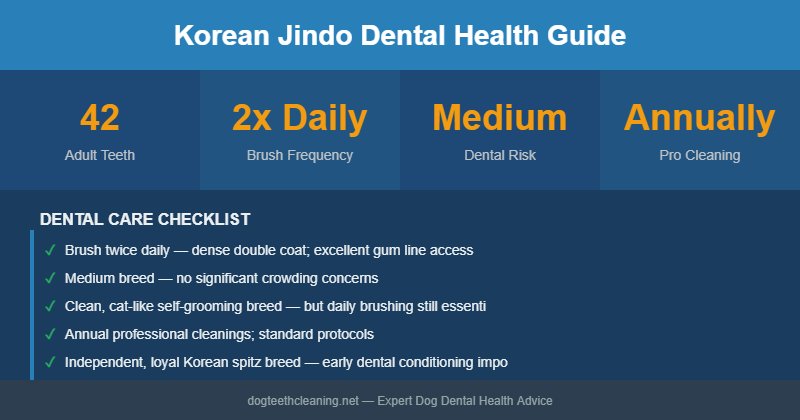
Korean Jindo Dental Anatomy & Risk Profile
The Korean Jindo (진도개, Jindo Gae) is a medium-sized Korean spitz-type hunting breed, weighing 40 to 60 pounds, considered a national treasure and natural monument of South Korea (Natural Monument No. 53). The breed has a moderate-length, slightly pointed muzzle providing good jaw space for all 42 permanent adult teeth with no crowding concerns. The dense, double coat — white, fawn, red, black, black-and-tan, or brindle — lies flat near the gum line. Dental disease risk is moderate — consistent with medium spitz-type Korean breeds.
How to Brush Your Korean Jindo’s Teeth
Brush your Korean Jindo’s teeth twice daily using a medium toothbrush or finger brush with enzymatic dog toothpaste. The dense coat provides good gum line access. Work at a 45-degree angle. Korean Jindos are famously clean and cat-like in their self-grooming habits, but teeth require active brushing beyond natural self-care. Jindos are deeply loyal to their family but independent and reserved with strangers — early dental habituation is important.
Warning Signs of Dental Disease in Korean Jindos
Moderate dental disease risk consistent with medium spitz-type Korean breeds. Signs include persistent bad breath, tartar buildup, gum redness or bleeding, and reduced appetite.
Professional Dental Cleanings for Korean Jindos
Annual professional dental cleanings for Korean Jindos with excellent home care. Standard anesthetic protocols appropriate.
Diet and Dental Health for Korean Jindos
High-quality complete diet for a medium active spitz-type breed. Dry kibble, VOHC-approved dental chews for medium dogs, water additives.
Breed Notes: Korean Jindo
The Korean Jindo is a natural monument and protected breed of South Korea (designated Natural Monument No. 53 in 1962). Export of Jindos from Jindo Island is historically restricted by Korean law. AKC Foundation Stock Service recognition. Lifespan 14–15 years.
For authoritative veterinary dental guidelines, see the AVMA pet dental care guide and the AKC Korean Jindo breed page.
Frequently Asked Questions: Korean Jindo Teeth
Why is the Korean Jindo a protected national monument?
The Korean Jindo (진도개) was designated South Korea’s Natural Monument No. 53 in 1962, recognizing its cultural and historical significance to Korea. Historically, export of Jindo dogs from Jindo Island was regulated to preserve the breed’s purity.
How often should Korean Jindos have professional dental cleanings?
Annual cleanings for dogs with excellent home care. Standard anesthetic protocols are appropriate for this medium breed.
Are Korean Jindos clean dogs?
Yes — Korean Jindos are famously clean, cat-like dogs that actively self-groom. However, dental health still requires active twice-daily tooth brushing; natural self-grooming does not address the teeth adequately.
Is the Korean Jindo AKC recognized?
The Korean Jindo is recognized by the AKC through the Foundation Stock Service (FSS) and has full recognition with the Korean Kennel Federation (KKF) and FCI.