Caring for your Russkiy Toy‘s teeth is one of the most important things you can do for their long-term health. Dental disease affects over 80% of dogs by age three, and russkiy toy teeth care requires a breed-specific approach.
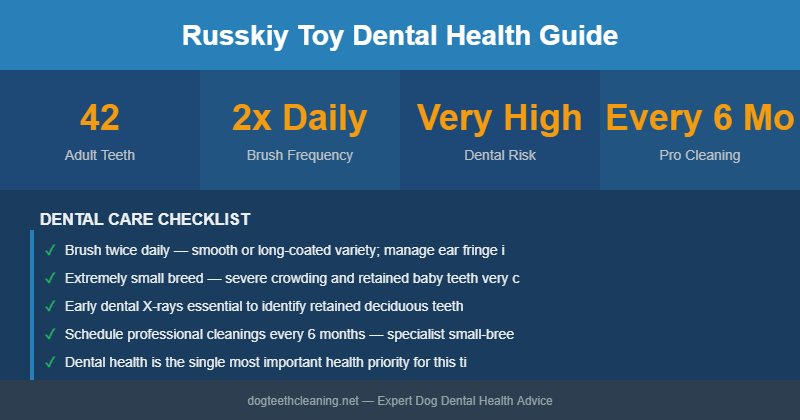
Russkiy Toy Dental Anatomy & Risk Profile
The Russkiy Toy (Russian Toy Terrier) is an extremely small Russian toy companion breed, weighing just 3 to 6.5 pounds. As one of the world’s smallest recognized breeds, the tiny jaw often cannot properly accommodate all 42 permanent adult teeth, resulting in crowding, overlapping, and retained deciduous teeth. Two coat varieties exist: smooth and long-coated (with decorative ear fringes). Dental disease risk is very high.
How to Brush Your Russkiy Toy’s Teeth
Brush your Russkiy Toy’s teeth twice daily using the smallest available toothbrush or finger brush with enzymatic dog toothpaste. The smooth variety provides direct access; long-coated individuals need ear fringe management. Russkiy Toys are lively, devoted, and alert — dental care conditioning from early puppyhood is essential in this extremely vulnerable tiny breed.
Warning Signs of Dental Disease in Russkiy Toys
Very high dental disease risk. Severe tooth crowding, retained deciduous teeth, and abnormal tooth positioning are common. Retained baby teeth require prompt veterinary extraction. Early dental radiographs are strongly recommended.
Professional Dental Cleanings for Russkiy Toys
Professional cleanings every 6 months. Early dental radiographs essential. Extremely precise small-breed anesthetic protocols for a dog that may weigh under 4 pounds require an experienced toy-breed veterinarian.
Diet and Dental Health for Russkiy Toys
High-quality complete diet for a very small active toy breed. Smallest available VOHC-approved dental chews. Water additives.
Breed Notes: Russkiy Toy
The Russkiy Toy descends from English Toy Terriers imported to Russia in the 18th century. Nearly extinct after the Russian Revolution and WWII, revived by Soviet-era breeders. FCI and AKC recognition exist. Expected lifespan is 10 to 12 years.
For authoritative veterinary dental guidelines, see the AVMA pet dental care guide and the AKC Russkiy Toy breed page.
Frequently Asked Questions: Russkiy Toy Teeth
Is the Russkiy Toy one of the world’s smallest dog breeds?
Yes — among the world’s smallest recognized breeds at 3–6.5 lbs, creating severe dental challenges. The tiny jaw cannot properly accommodate a full complement of adult teeth, requiring specialized care throughout life.
How often should Russkiy Toys have professional dental cleanings?
Every 6 months starting young. Early dental radiographs are essential. Extremely precise anesthetic protocols for a dog under 4 pounds require an experienced toy-breed veterinarian.
What is the difference between smooth and long-coated Russkiy Toy?
The smooth variety has a short sleek coat; the long-coated has decorative fringes on ears, limbs, and tail. Both are the same breed — coat type does not affect dental risk or care protocols.
Is the Russkiy Toy related to the English Toy Terrier?
Yes — descended from English Toy Terriers imported to Russia in the 18th–19th centuries. Two centuries of separate development produced the distinct Russkiy Toy type.